
Outsourcing marketing for IT companies,
based on our 15 years of experience in the field
based on our 15 years of experience in the field


Facebook advertising continues to be one of the most powerful tools for digital promotion for businesses in 2026. The Meta platform covers millions of users worldwide and provides extensive opportunities for ad targeting and optimization. Facebook Ads is especially relevant for the B2B segment, where precise targeting, strong analytics, and access to business leads are critically important.
Facebook, as part of the Meta ecosystem, is one of the most effective platforms for advertising in 2026. The combination of advanced technology, high personalization, a well-developed Ads Manager, and deep integration with other Meta services, including Instagram, Messenger, and WhatsApp, makes Facebook an indispensable tool for both B2B and B2C promotion.
Retail and e-commerce are the top-performing sectors in terms of effectiveness, especially in fashion, technology and electronics, and automotive. Advertising on Facebook is also effective for service industries, particularly medical, educational, and insurance services. The cost per lead (CPL) in these segments remains relatively low, ranging from $5 to $15, making the platform an attractive channel for lead generation.
According to WordStream, B2B companies specializing in software solutions and services achieve an average CTR of 0.78% and a CPL of around $16. High conversion rates are also observed in the tourism and restaurant industries.
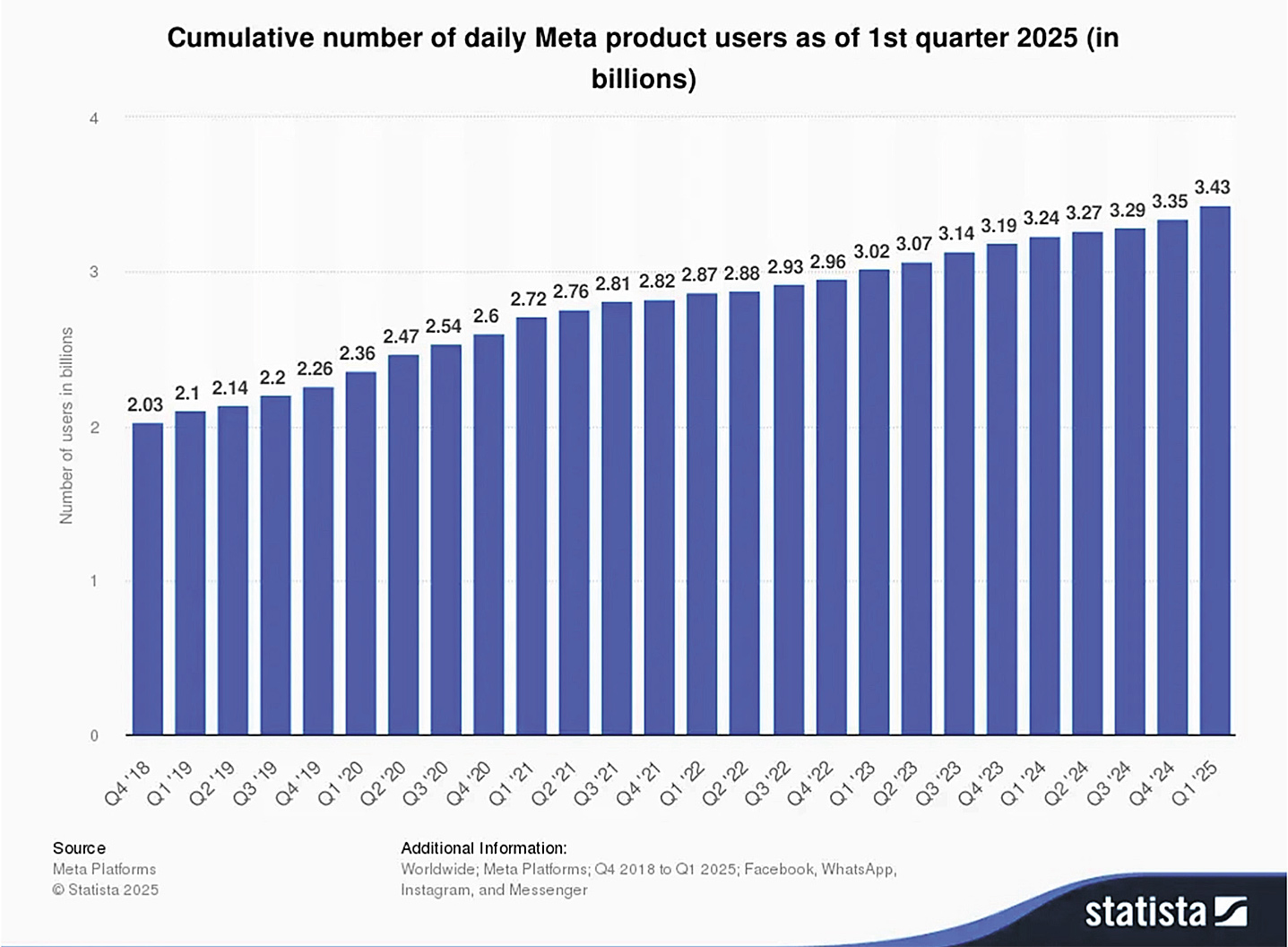
As of January 2026, the platform's audience exceeds 3 billion users, with 2.11 billion visiting daily. The largest traffic comes from India (375 million users), the United States (194 million), Indonesia (161 million), and Brazil (155 million).
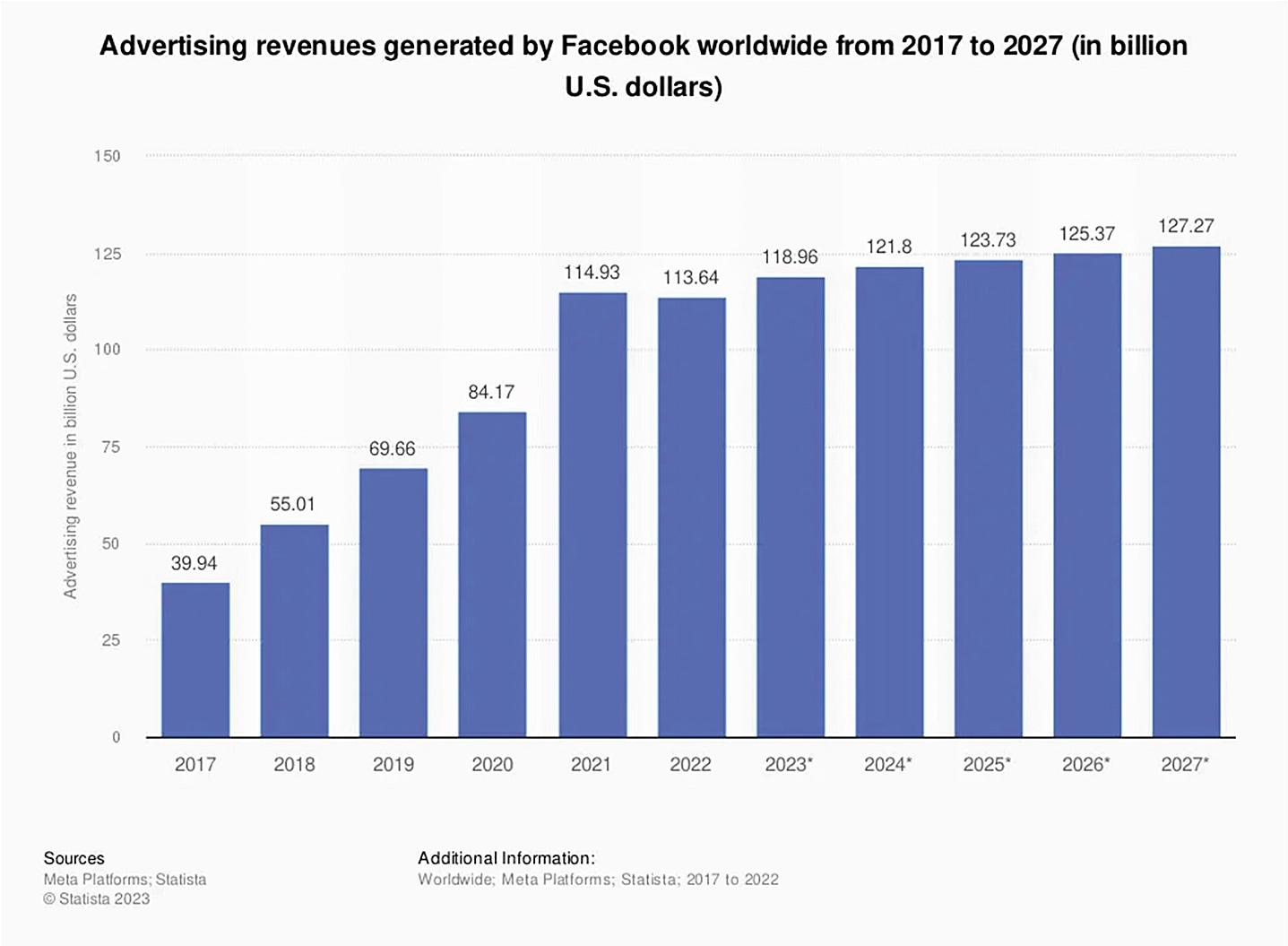
According to Statista, in 2025, over 98% of platform users accessed pages via mobile devices, and the average time spent in the app increased to 38 minutes per day compared to 2023.
Users most frequently engage with short video formats, which generate a CTR 2.5 times higher than static banners, especially in the mobile feed. On average, users click on banners in 1.14% of cases, while this rate is even higher for B2B — reaching up to 1.4%.
Users get a powerful and intuitive platform for managing advertising. Ads Manager allows full control over the campaign lifecycle — from A/B testing to analytics and scaling.
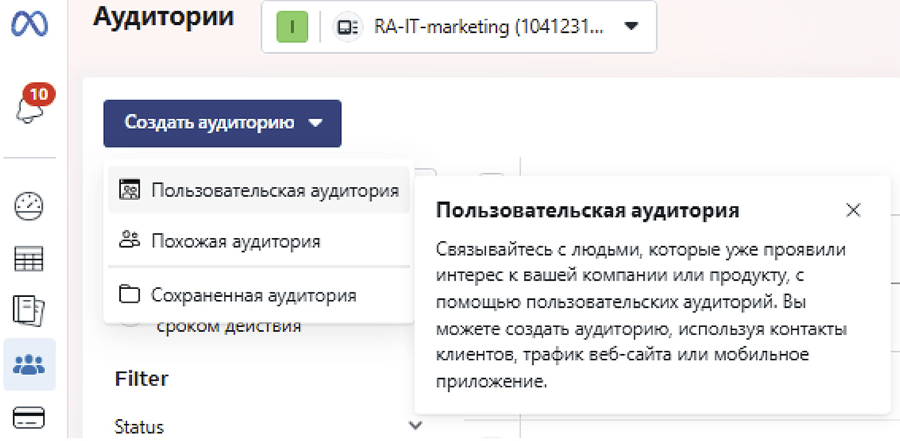
One of the key advantages is detailed targeting: by demographics, interests, behavior, Lookalike audiences, custom lists, and website/app data (via Meta Pixel and SDK). This enables the creation of highly accurate ad sets.
Thanks to a unified advertising account, Facebook Ads automatically reach multiple Meta platforms, including Instagram, expanding reach and increasing campaign effectiveness. This is especially important for B2C businesses focused on visual positioning.
According to WordStream analytics, the average cost per click on Facebook was $0.94, compared to $2.69 on Google Ads. Despite increased competition, Facebook remains one of the most affordable platforms in terms of lead cost, especially in e-commerce and local business.
In Facebook, you can precisely specify age, gender, relationship status, education level, and even the user's job title. For example, a B2B startup selling a CRM system can target sales managers and CEOs with an annual income of over $100,000 in specific U.S. cities. Geographic targeting allows you to focus on cities, neighborhoods, and areas around offline locations, such as offices within a 5 km radius.
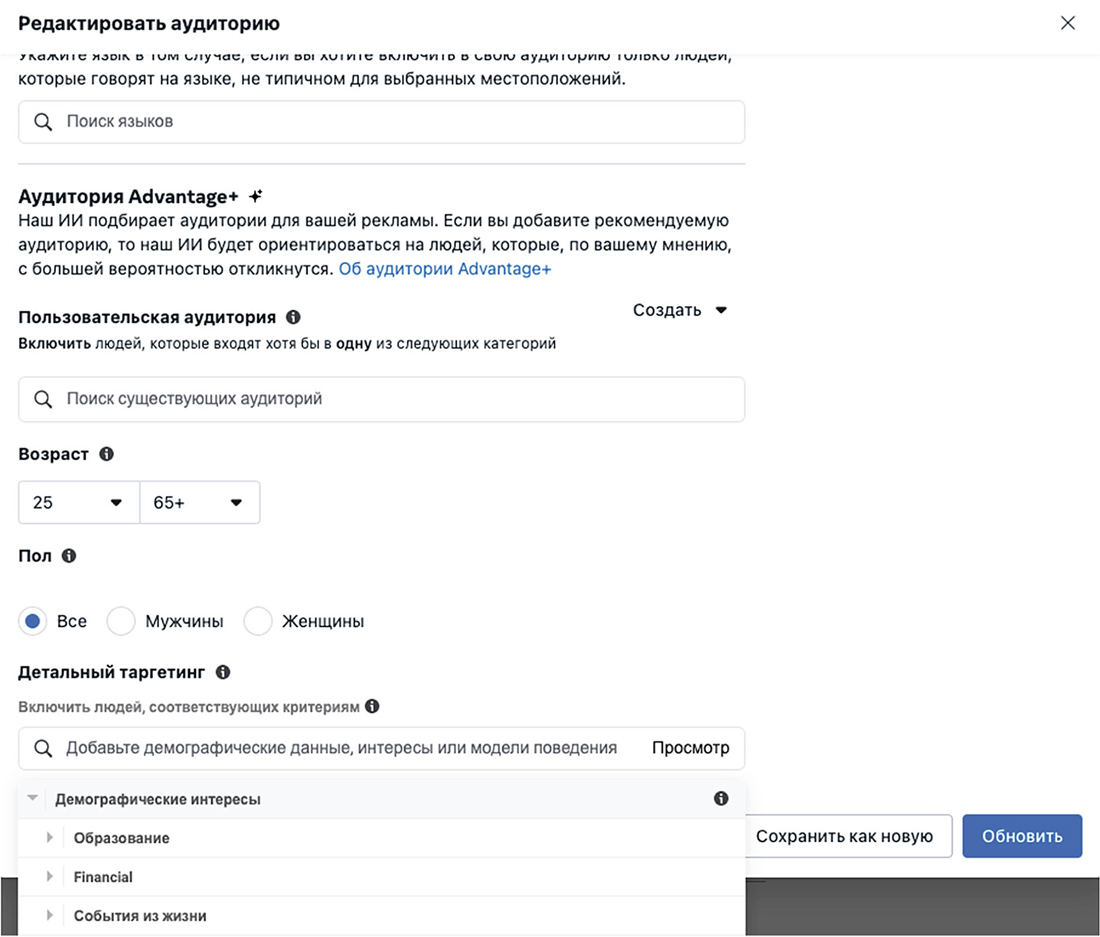
The platform collects data on users' interests, including those from third-party websites. Advertisers can select pre-defined segments such as sports, fashion, or technology and combine them in various ways. For example, to promote an online meditation service, you could target women aged 25–34 who are interested in meditation, self-development, yoga, and who made online purchases in the last month.
The platform allows you to upload email or phone number lists and retarget website visitors using Meta Pixel, simplifying setup and enabling the automatic attraction of similar users. The system identifies users with similar behavior and characteristics, increasing campaign effectiveness in e-commerce by up to 40%.
Information such as travel habits, frequent purchases, search queries, and device usage is analyzed and can be used for targeting. For example, a travel agency can target users who booked plane tickets in the last 60 days.
With the introduction of Meta’s Advantage+ and AI features, advertisers can now automatically distribute budgets across audiences and ads using machine learning. These campaigns show up to 20% higher ROI compared to manually managed settings.
Through Meta Ads Manager, you can run unified campaigns across Facebook, Instagram, Messenger, Threads, and the Audience Network, using a single budget and unified targeting settings. The advantages of such integration are clear:
Additionally, Meta’s automated algorithms optimize budget distribution across all platforms, increasing conversion efficiency and reducing the cost per lead.
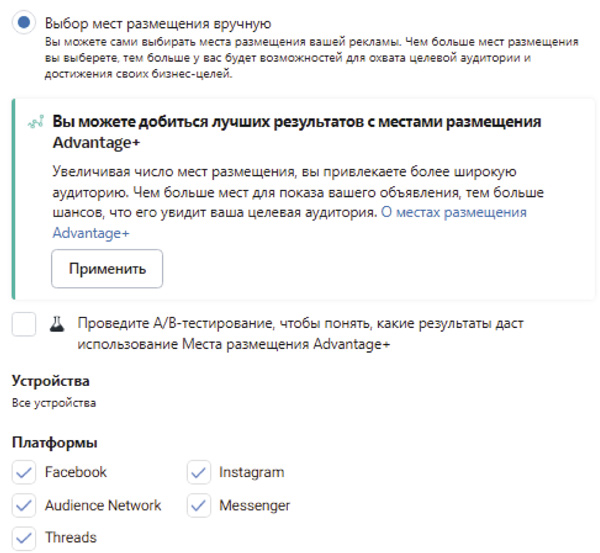
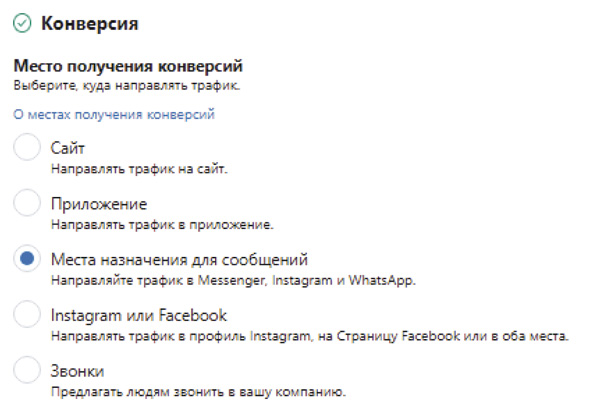
With Ads Manager, you create a campaign just once — select your objective, set a budget and goals, and then specify which platforms within the Meta ecosystem it will be shown on. The budget is automatically distributed based on the performance of each channel, eliminating the need for manual reallocation and reducing the time spent managing ads.
The same parameters are applied across all placements simultaneously. For example, a business offering CRM implementation can show ads to company owners and managers with 50+ employees in a specific city, selecting the relevant interests and job titles. The ad leads to a landing page offering a free audit. A healthy food supplier, in turn, can show ads to HR managers and office managers at companies located in business districts, emphasizing employee care and offering a first-order discount. Such precise targeting helps efficiently use the budget and directly reach decision-makers.
Make sure you have the Administrator role in Business Manager and access to the required ad account — otherwise, the Ads Manager section may be unavailable or show an empty dashboard.
New features may first appear in the English version of Ads Manager and become available in localized versions with a slight delay.
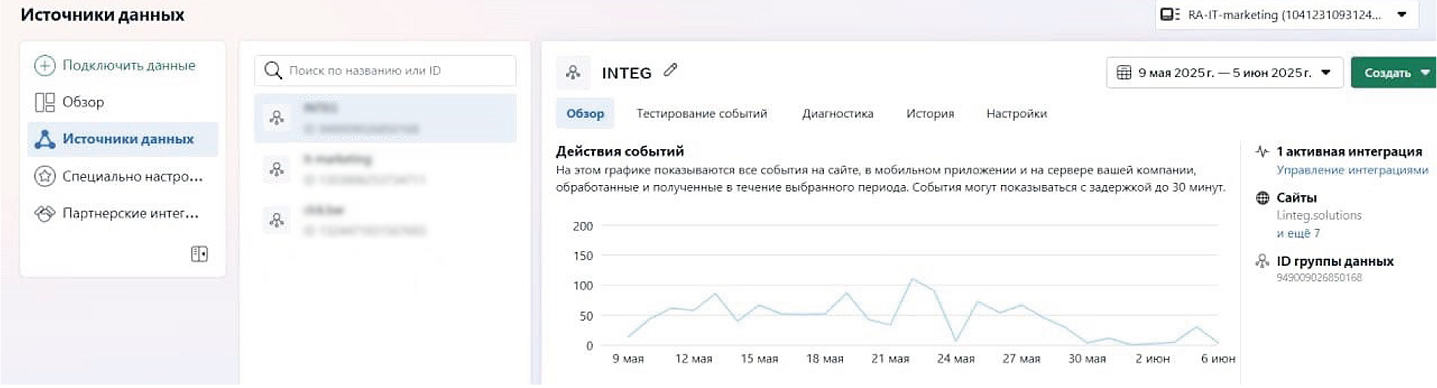
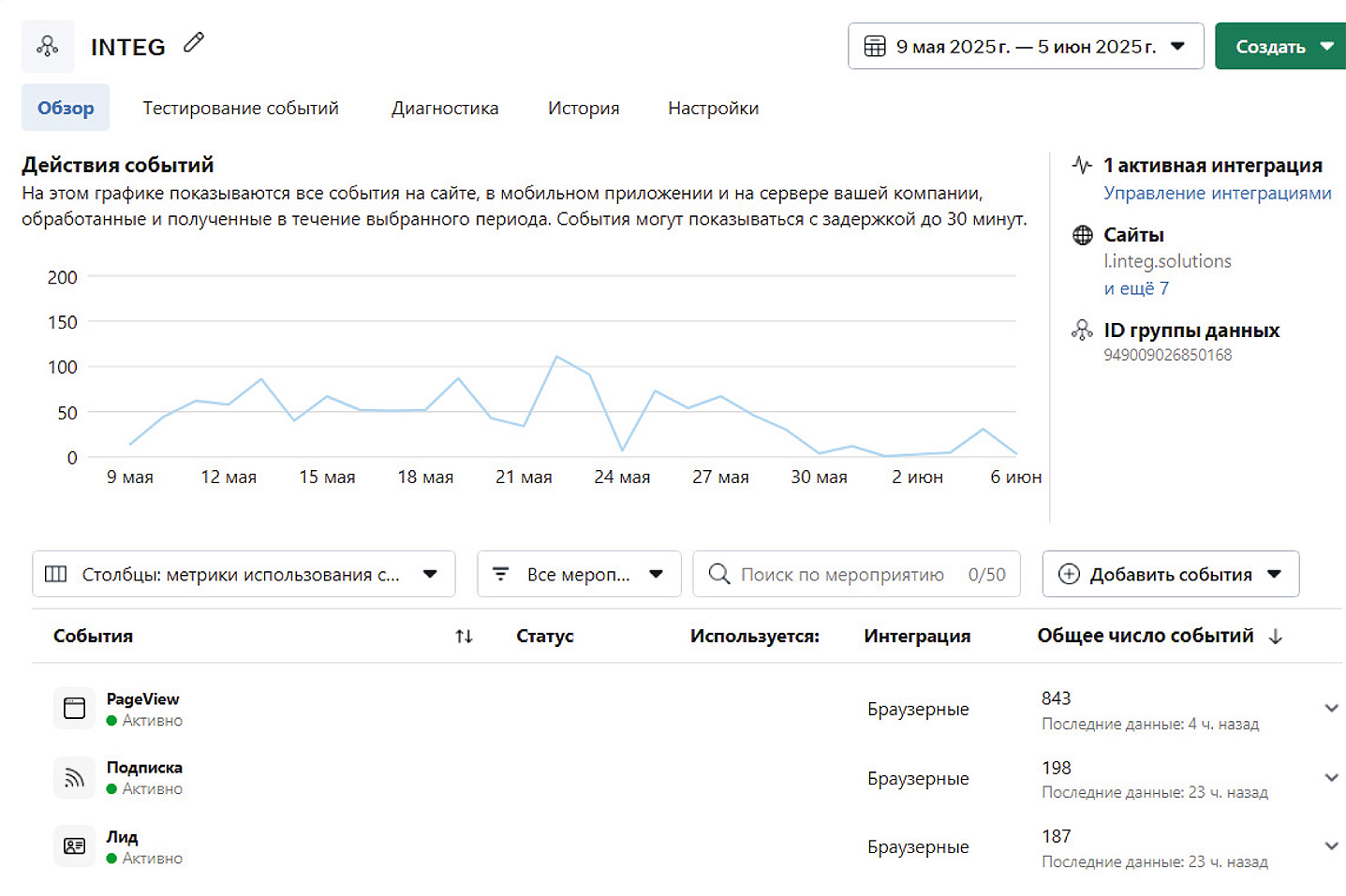
Events
Facebook advertising remains one of the most competitive options in the market. Despite increasing competition and rising costs in some niches, both new brands and large advertisers can run effective campaigns based on their budget. Let’s take a closer look at how pricing is formed, what payment models are available, and what budget is best to start with.
1. CPC (Cost per Click)
This is the cost for each click. In 2026, the approximate range by industry is:
Example: A company offering a cloud-based project management solution pays $3.20 per click. With a 2.5% conversion rate, the cost per lead is $128. If the average contract brings in $1,800 — the ad is justified and delivers a positive ROAS.
2. CPM (Cost per Mille)
Cost per thousand impressions. Suitable for brand awareness campaigns. The average range in posts is around $3–5, while in Stories, Reels, and Messenger Inbox it is slightly higher — $6–10.
Example: An IoT startup for smart office products runs a brand awareness campaign with a CPM of $5. For $5,000, the ad reaches about one million impressions among IT directors and system administrators, increasing brand recognition before a cold email outreach campaign.
3. CPA (Cost per Action)
Cost per conversion — the most important metric for e-commerce, SaaS, and B2B. A simple lead magnet (registration, subscription) costs around $5–15. A sale (e-commerce, tickets, courses) — $15–50. Complex services (mortgages, insurance, legal support) are more expensive, with approximate costs of $50–120+.
Bidding Strategies
When planning your budget, it’s important to understand not only the metrics but also the bidding strategy. Choosing the right strategy determines how your budget will be spent and what results you’ll get: maximum reach, lowest cost per lead, or a stable CPA. Below are the key types of bidding strategies:
Minimum Cost
Ideal if you want to get as many conversions as possible at the lowest possible price. The system automatically adjusts the bid, but you can’t control the cost per result. This is a good option for testing and scaling, but can become inefficient if the low-cost audience is exhausted.
Maximum Bid
You set the maximum bid per result, and the system won’t exceed it. This gives you control over costs, but if the bid is too low, the ad may not perform well and the budget may not be fully spent.
Target Cost
The system tries to keep the cost per result at a set level. This is suitable if you want a stable CPA. However, it limits the ability to get cheaper results.
Target ROAS
Focuses on return on ad spend. It helps not only reduce the cost per lead but also increase revenue from it by setting a minimum ROAS at the ad set level.
Maximum Value
The maximum value strategy helps fully utilize the budget by focusing on the highest-value actions, such as purchases of the most expensive products or solutions. For example, an IT company can prioritize selling premium products to maximize profit per conversion.
Recommended Starting Budget
A minimum daily budget of $1 is suitable only for testing hypotheses and creatives. For a real start, it’s better to allocate $10–20 per day. This allows for A/B testing and meaningful lead analytics.
Advertising can be paid via bank cards, PayPal (in supported regions), or through partner agencies — especially relevant under regional restrictions. Basic payment settings are available in the “Payments” section of the Facebook Business Manager: here you can add a payment method, set a daily limit, and specify the account currency.
To achieve maximum efficiency, it makes sense to focus your budget rather than spread it thin. Carefully set up targeting, choose the right bidding strategy, and test different options. For example, an EdTech startup can launch ads targeting young professionals aged 25–35 in major cities who are interested in career development and self-improvement. Then, use retargeting for those who interacted with the video content.
Video formats are especially cost-effective — on average, they generate 2–3 times more clicks than static banners and provide a higher volume of engaged traffic at the top-of-funnel stage.
In targeted advertising on Facebook, the term “ad set” refers to a strategic combination of four key elements: the creative, target audience (TA), offer, and landing page (or website). An effective ad set ensures alignment between the message and the audience’s needs, which helps increase conversion rates and reduce the cost of customer acquisition.
At the core of any ad set is an understanding of the audience — their needs, desires, and habits. For example, a company selling smartwatches might choose a target audience of men aged 25–40 who are actively into sports, and offer them free shipping and a one-year warranty. In this case, the creative is created in the form of a short video showing the tracker’s features during a run, while the landing page is designed to be as user-friendly as possible, allowing for quick order placement in just two clicks.Such an ad set guides the user through a well-structured funnel — from interest to action. This approach not only improves campaign effectiveness but also helps reduce advertising costs.
It takes just four simple steps:
Start with a deep analysis — review similar campaigns from competitors using the Library to understand which formats and offers are most effective. To speed up the analysis and get more accurate results, use spy services like AdSpy or BigSpy, where you can view competitors’ promotional materials, their reach, ad scheduling, and even approximate rotation frequency.
This approach allows you to craft more precise offers for your target audience and build complex ad sets that may also include intermediate pre-landing pages or chatbot integration for additional warming up of the audience.
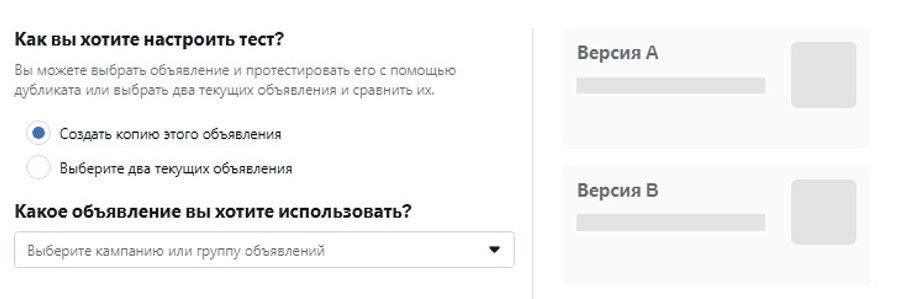
Create several creatives for A/B testing to identify the most effective ones. After the test period, keep only those ad sets that show the best metrics (CTR, CPA, ROAS), and gradually scale the budgets. It’s important to remember that ad sets can "burn out" over time — the audience gets tired of repetitive messages, leading to so-called banner blindness. That’s why experienced specialists regularly change creatives, expand targeting, and connect Lookalike audiences.
When creating ad sets, it’s not the number of creatives or the high budget that matters — it’s the effectiveness of each element: the offer, the landing page, and the creative itself. An effective offer is a clear, value-driven proposition that solves a specific problem for the potential customer and motivates them to take action. For example, an offer like “14 days free with no card required” for a SaaS product can significantly boost conversion. Key elements include specificity, time-limited availability, and no risk for the user.
For an IT company offering cybersecurity solutions, an effective ad set could include a 15-second video with infographics, an offer for hacking protection with a clear platform, turnkey implementation, and a 30-day free trial. The targeting should focus on IT directors and CISOs in large companies (500+ employees) who are interested in cybersecurity, DevOps, and network technologies, in countries with a high level of IT infrastructure (U.S., Canada, U.K.). The landing page should include a countdown timer, a short GIF demo of the interface, industry client testimonials, and a form to request a trial.
A high-converting landing page is crucial. On average, the conversion rate across all industries is about 6.6%, according to Unbounce. Key factors that influence landing page success include:
To get started in Meta Ads Manager.
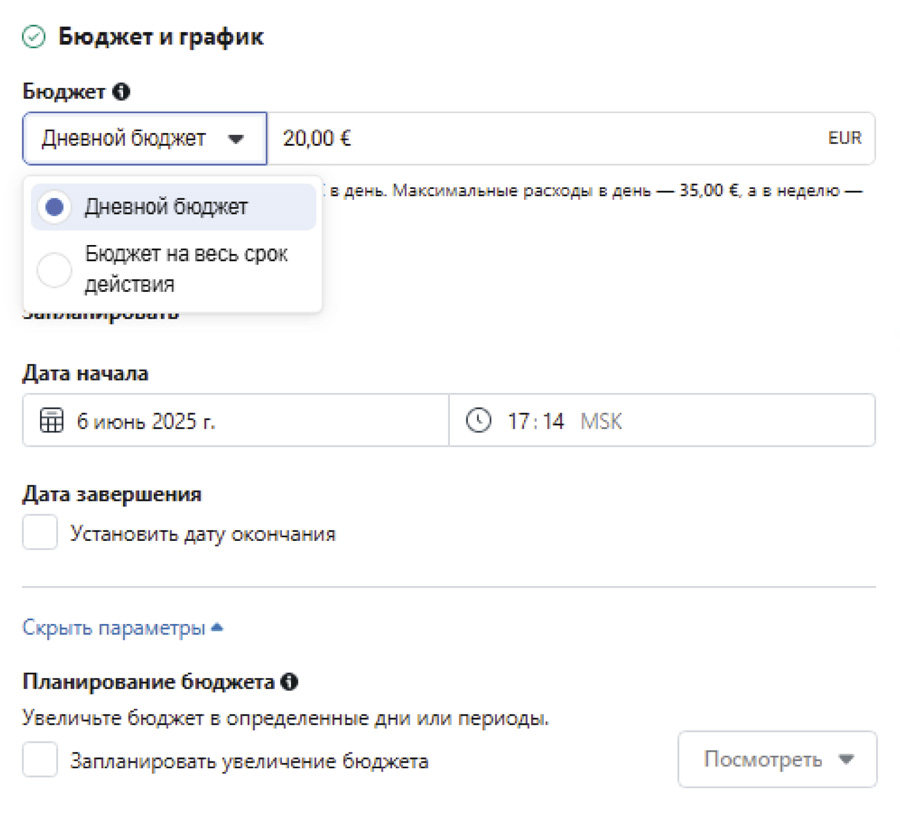
For promoting an online programming course, select the objective “Leads”, target an audience aged 18–35 interested in IT, and use a video demonstrating the course content.
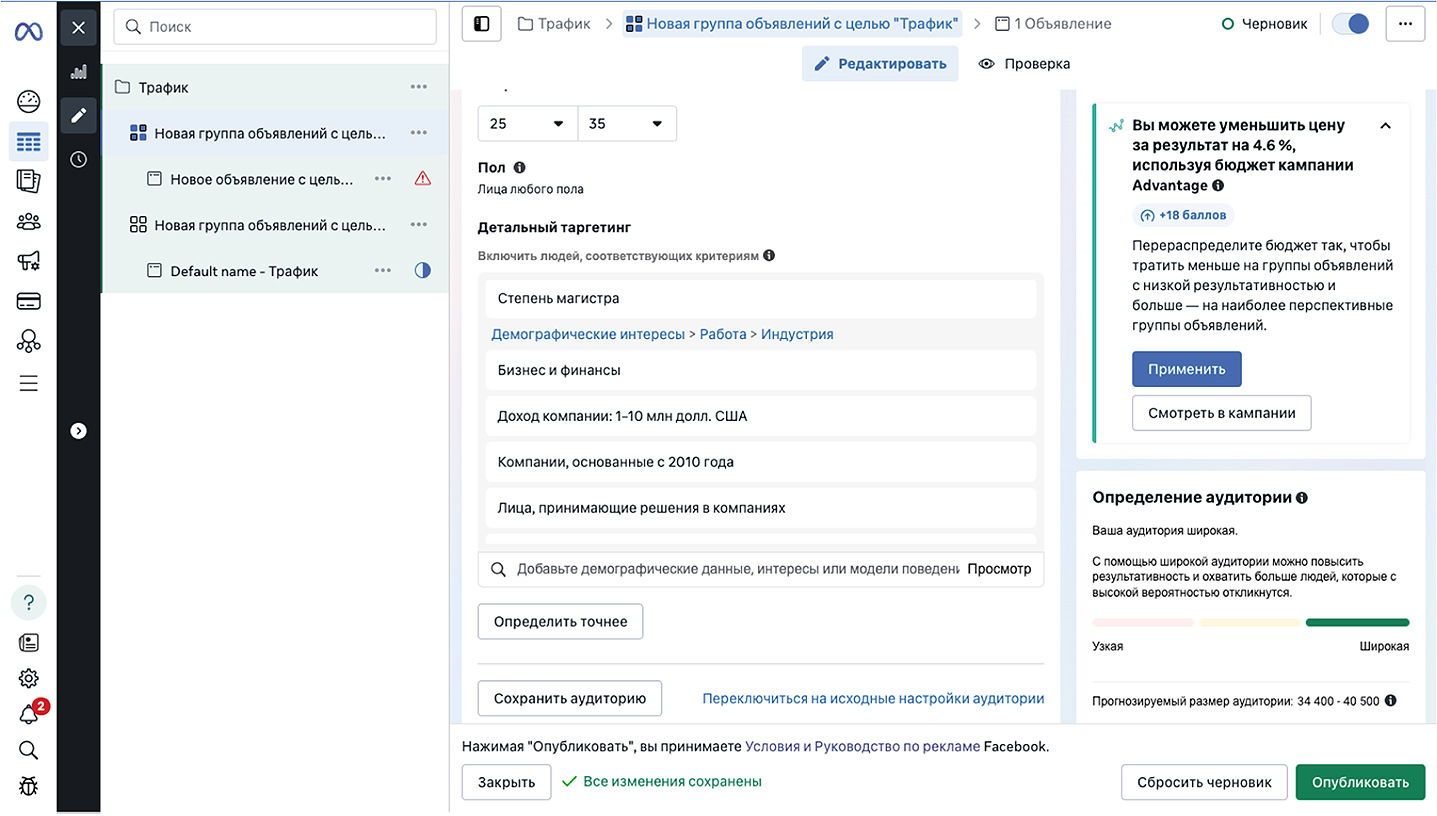
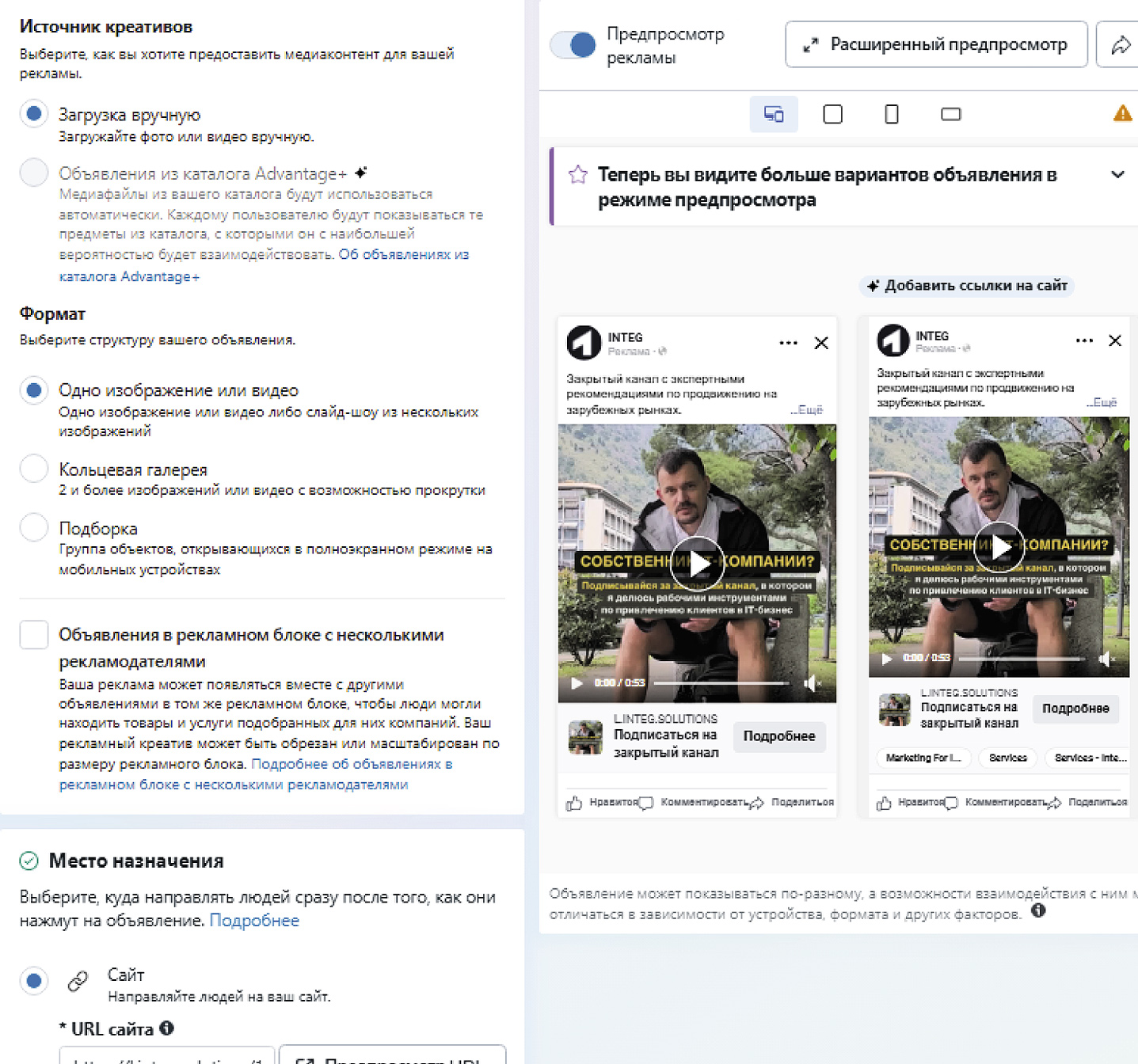
Meta offers a variety of tools for precise audience targeting:
Core Audiences: Target based on demographics, interests, and behavior.
Custom Audiences: Audiences based on interactions with your business (e.g., website visitors).
Lookalike Audiences: Find new users who are similar to your current customers.
Use broad targeting and the audience expansion feature to allow Meta's algorithms to optimize ad delivery and find the most interested users.
Meta Pixel is a tool that helps track user behavior on your website after they interact with your ads. With it, you can see what actions visitors take — such as signing up, submitting a lead, adding items to a cart, or making a purchase. This allows you not only to evaluate the effectiveness of your advertising but also to improve it using precise data, automated optimization, and retargeting.
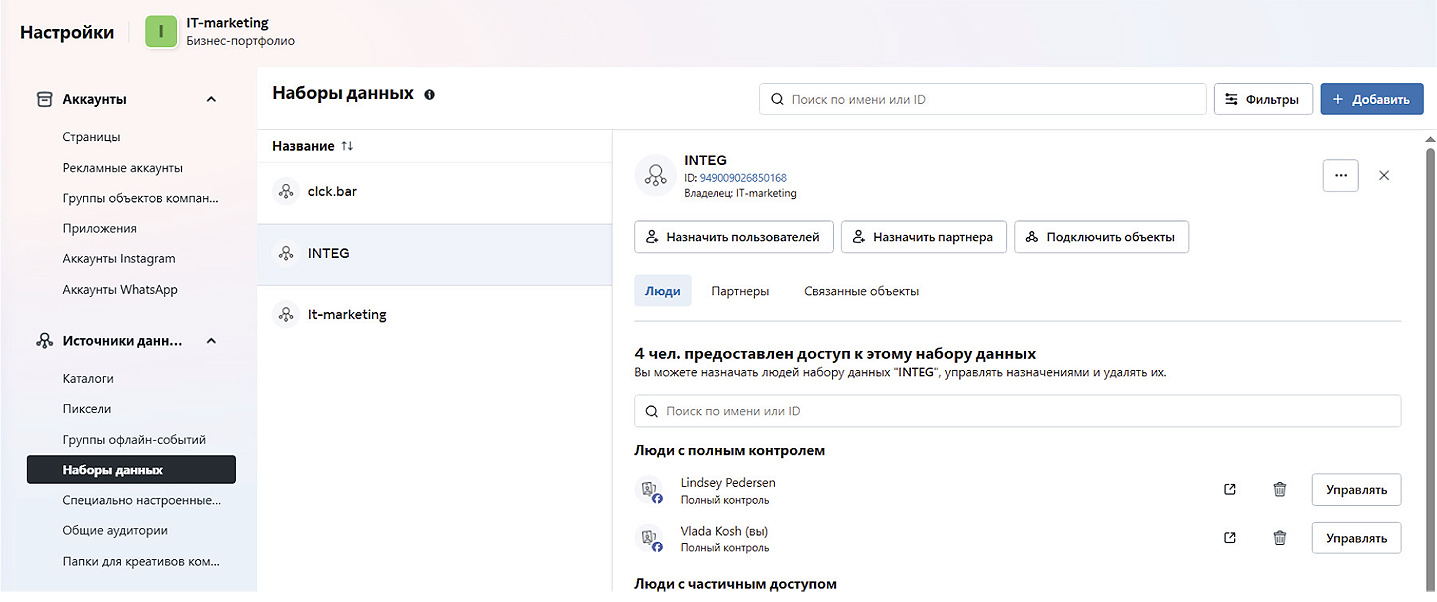
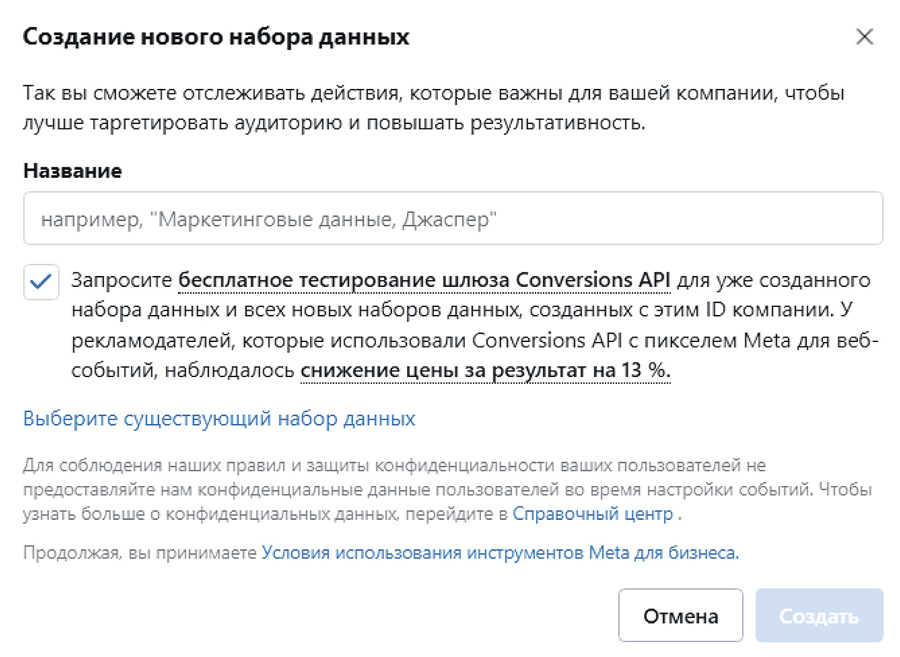
To get started with the pixel, go to the “Events Manager” in your Meta Ads account. Click “Connect Data Source”, select the type “Web”, and then choose “Meta Pixel”. Follow the step-by-step instructions: you can either manually insert the pixel code into your website’s HTML or connect it via partner platforms (e.g., Shopify, WordPress, Tilda).
After installation, it’s important to set up events — the actions you want to track. This setup will allow you to get accurate data on your sales funnel and assess the real cost of a lead or customer.
We’ve already discussed the key metrics, their significance, and approximate costs. But how do you interpret these indicators, and what should you do if they start to decline? Let’s take a closer look.
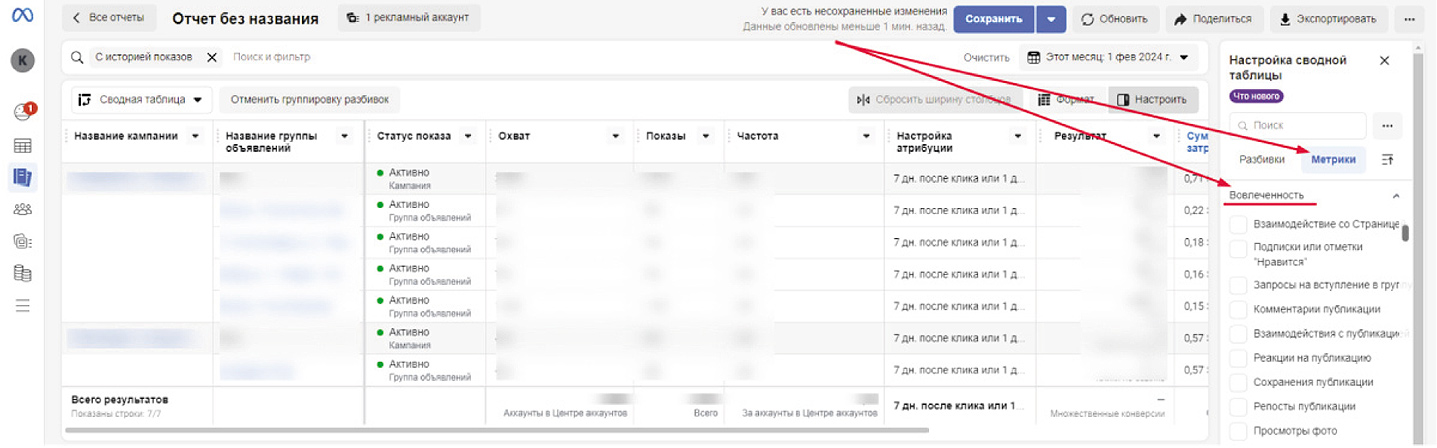
If your CTR (Click-Through Rate) is below 1% — your creatives are not engaging enough. You need to act quickly: change images and videos, write more provocative headlines, and revise the entire text. Also, double-check your targeting and ensure your offer is clearly and compellingly formulated.
Optimal CPC (Cost Per Click) varies by industry. Conduct a competitor analysis. If your CPC is higher than the average in your niche — you’re overpaying. Improve the quality of your ads to make them more relevant to your audience, adjust your bidding strategy, and narrow your targeting to focus on more interested users.
CVR (Conversion Rate) should be at least 5%. If it’s lower — users are not satisfied with what they see after clicking. Review the landing page: it should clearly match the promise made in the ad. Simplify the order form or "Buy" button. Ensure the page loads quickly. If needed, create a focus group or survey to identify the page’s weaknesses.
ROAS (Return on Ad Spend) should be higher than 1 — meaning you’re earning more than you’re spending. A good ROAS is considered to be 4:1, where for every dollar spent, you earn $4 in revenue. However, actual numbers may vary depending on the industry. If you’re in the red or breaking even — look for where the budget is being wasted. Check your CVR and CPC. The issue may lie in your sales funnel or in the high cost of customer acquisition.
Even if your key metrics are within the normal range, there’s always room for improvement. To do this, run A/B tests. Create 2–3 ad variations with different images, headlines, and other elements, and launch them simultaneously with a small budget. The platform will show you which version performs best.
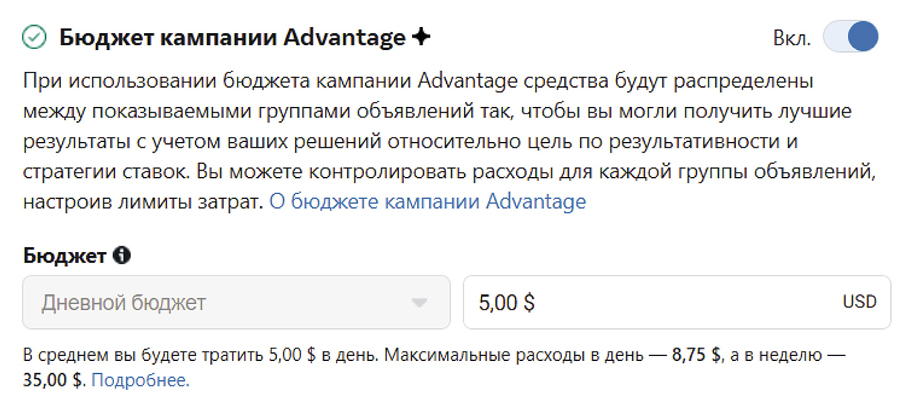
Use Advantage+ Budget (Smart Budget Allocation). Enable this setting, and the algorithm will automatically redistribute your budget among your ads, allocating more funds to those that are currently showing the best results. This helps maximize performance with minimal manual effort.
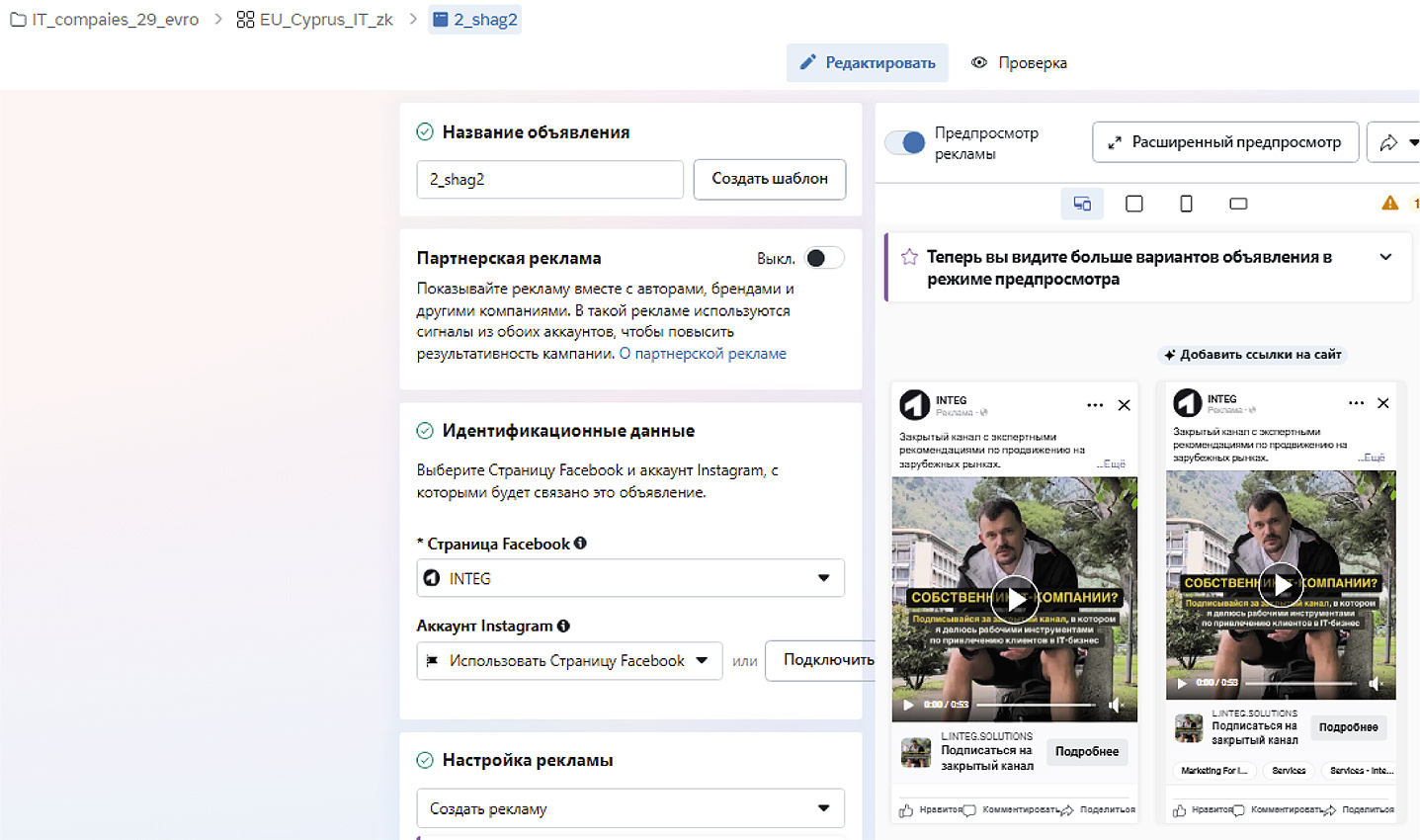
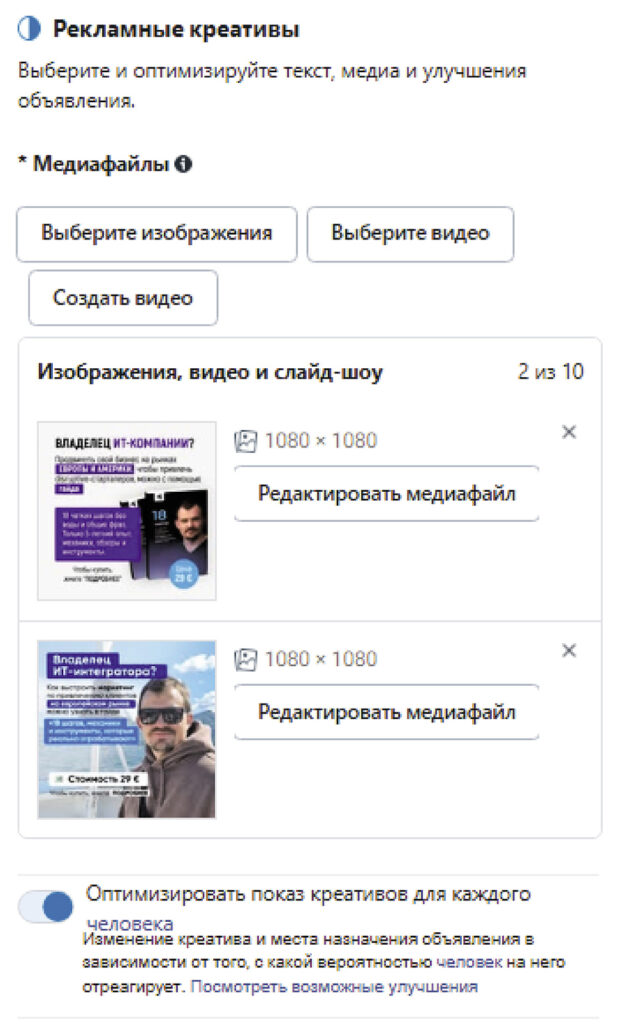
Smart Creatives (Dynamic Creatives / Advantage+ Creatives). Provide the algorithm with 3–5 images, videos, 5 headlines, and 2 descriptions — it will combine them and show each person the most relevant combination that is likely to engage them. If a certain format or audience is delivering a strong ROAS, increase the budget for it. Also, try creating similar successful ads to amplify the effect.
Screenshot with Dynamic Creatives Enabled.

Imagine this: a customer sees your ad in Instagram, then Googles your business, visits your website, but doesn’t make a purchase. Three days later, they call the number from your site and place an order. Without end-to-end analytics, you won’t understand that this call and sale were the result of that very Instagram ad! You’ll just see ad spend and “mysterious” calls. End-to-end analytics connects the dots: it shows what led the customer to make a purchase, even if they contacted you a week later.
Meta offers integration with a wide range of tools for end-to-end analytics, making the process easier and providing the most accurate insights.
The main tool is Google Analytics 4. It automatically tracks where a lead came from and shows user actions on the site: browsing the catalog, reading the blog, filling out a contact form.
However, Google doesn’t track calls or offline sales. If a customer leaves the site and calls later, the connection is lost.
Tools like CallTouch and Roistat are responsible for tracking calls. These systems replace phone numbers: on your site, each visitor sees a unique number depending on where they came from. If a customer calls that number — the system knows which ad brought them. CallTouch and Roistat also record the calls: what was discussed, whether a sale happened, and show the real cost of lead acquisition.
Tools like Power BI and its equivalents collect data from everywhere — from Google Analytics, CallTouch, Roistat, CRM where sales are recorded, and ad accounts — and combine it into one clear picture.
To connect these tools and pull data from other sources into your Facebook Ads account, go to Events Manager Find the “Partner Integrations” section.
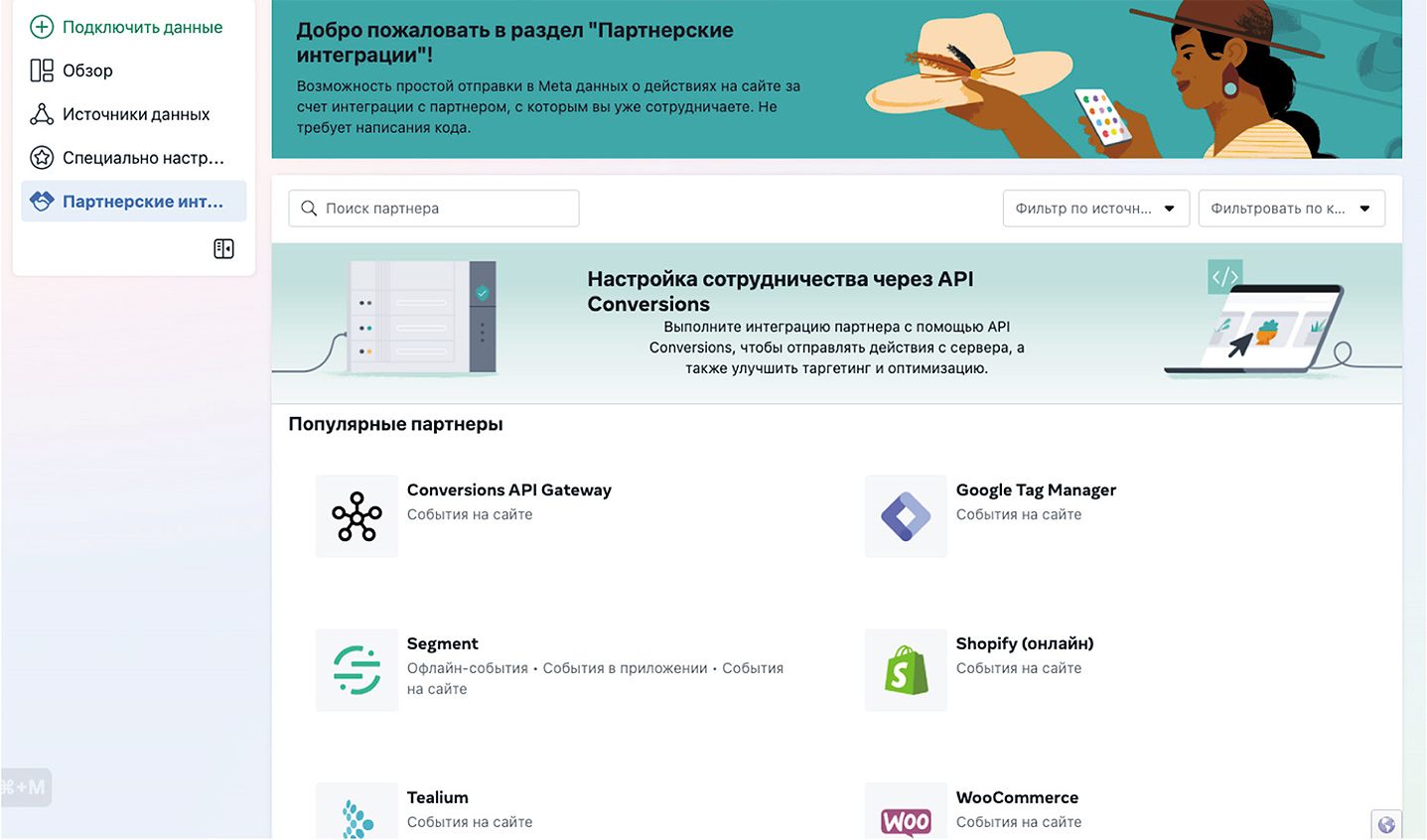
You will see a list of available tools, categorized by their purpose.
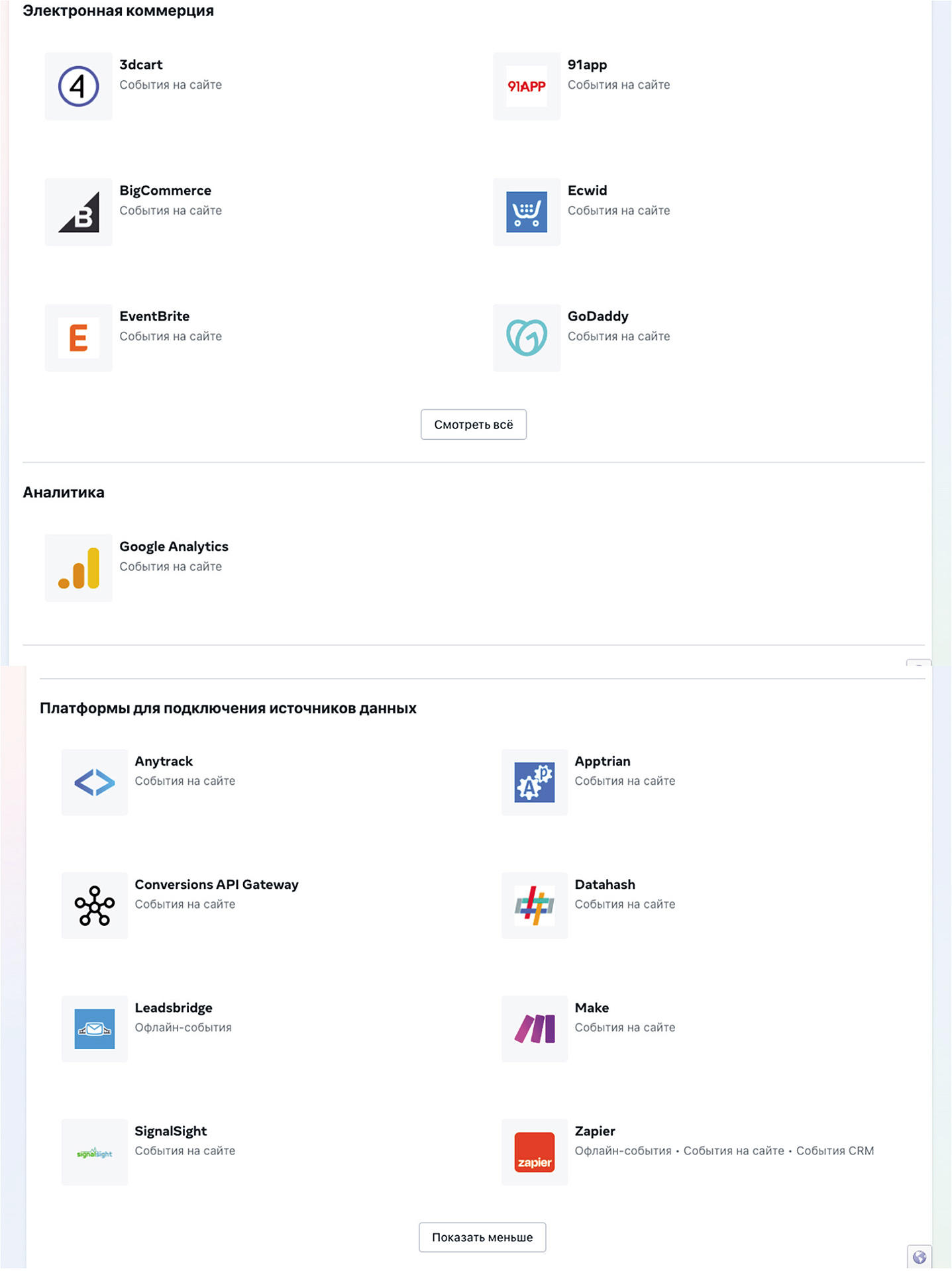
Choose the tools that best fit your functional needs.
The platform also allows you to pull analytics from your website, app, CRM, or messages in messengers. In the same Event Manager section, select the option “Connect Data”.
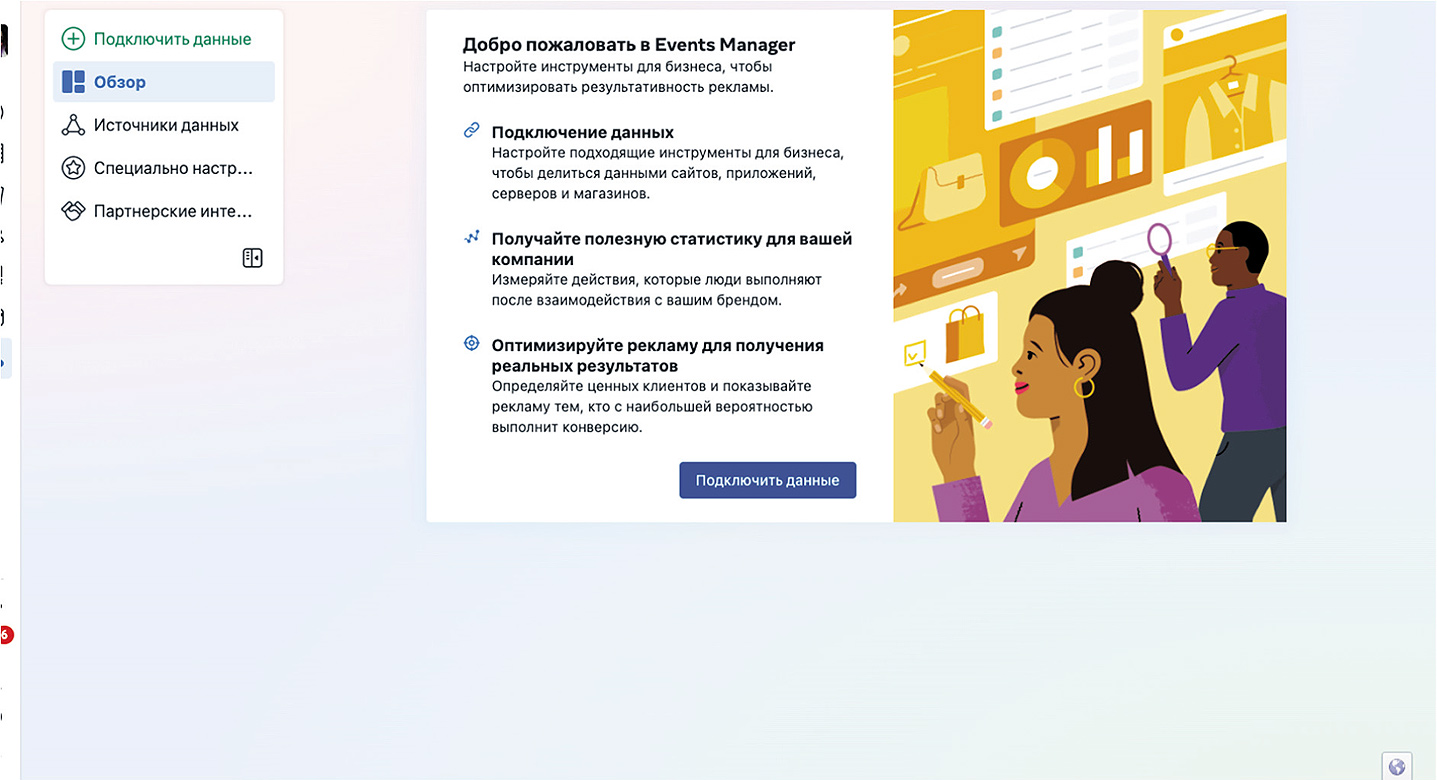
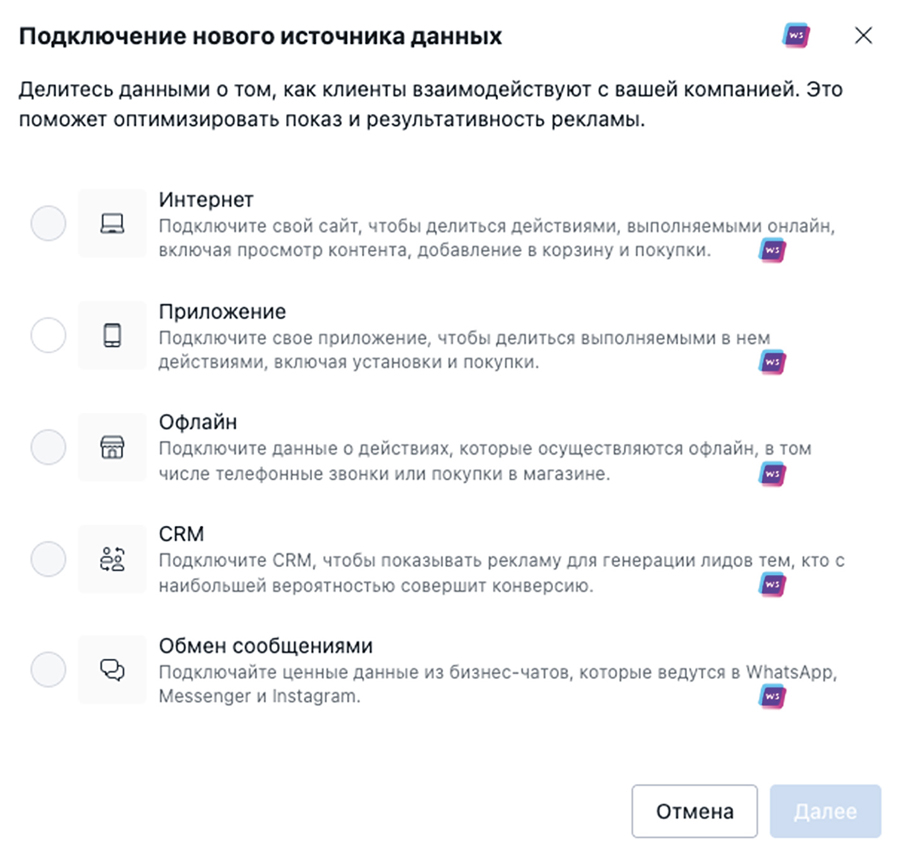
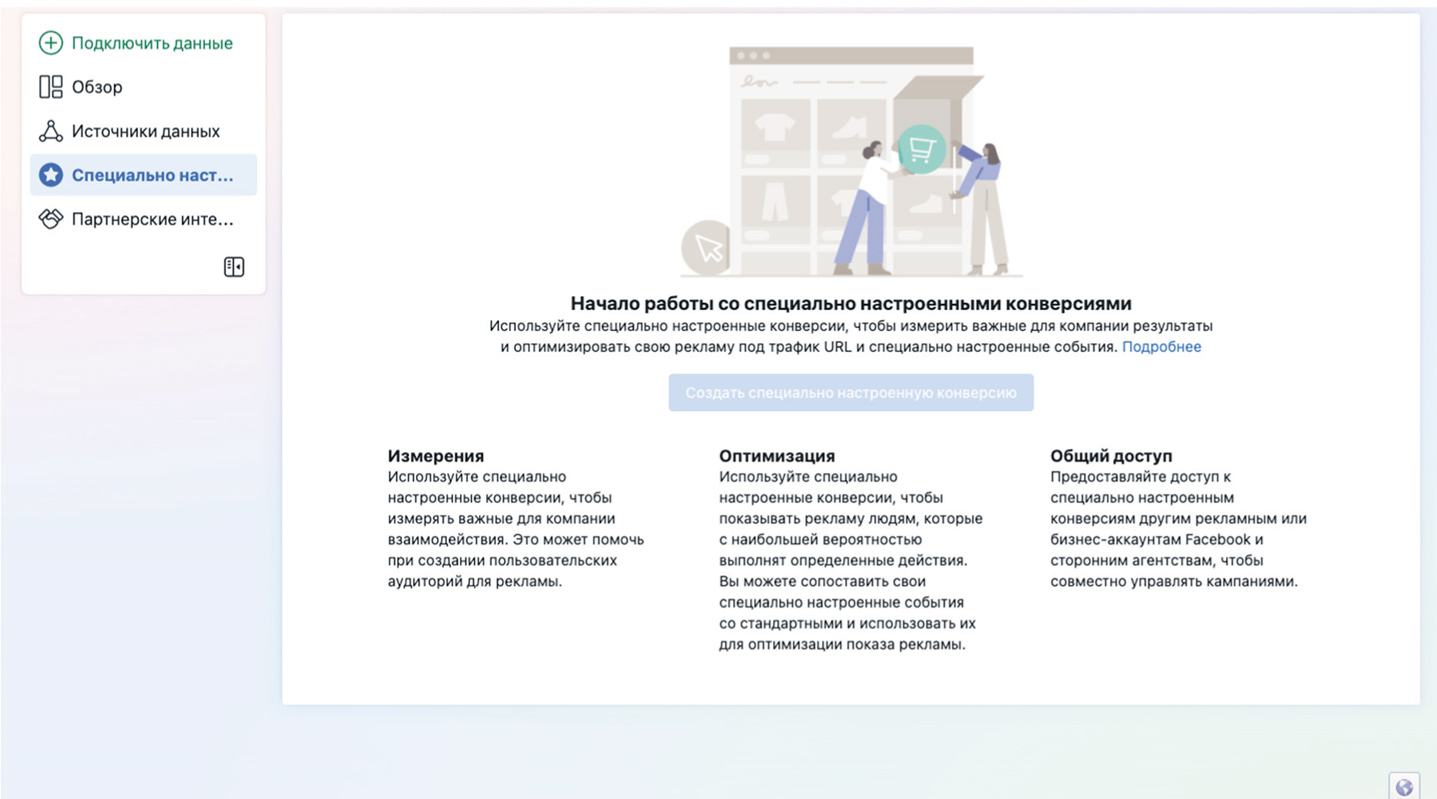
After you connect the data sources you need, you’ll be able to create custom conversions to get precise results from end-to-end analytics.
| Parameter | Facebook Ads | Google Ads |
| Audience | Targeting by interests, behavior, and demographics. Ideal for grabbing attention | Users search for products themselves — targeting by keywords and intent |
| Formats | Visual: banners, videos, carousels, stories, Reels, lead forms | Text ads in search, display ads in Google Display Network, Google Shopping, YouTube Ads, Google Maps reviews |
| Launch Speed | A campaign can start showing within 15–30 minutes | Search ads activate quickly, but moderation may take up to 24 hours |
| Best for Niche | B2C products, mobile apps, personal branding, local businesses | High-competitive B2B, e-commerce, promotion of hot search queries |
| Analytics and Tracking | Built-in statistics + Meta Pixel / Conversion API | Google Analytics 4, Google Tag Manager, Google Ads Conversion Tracking |
Facebook Ads is more effective when you need to create demand or test offers on a cold audience. It works great for visual content, branding, retargeting, and building customer loyalty.
Google Ads performs better when users are already actively searching for a product or service. Search ads are ideal for the final stages of the sales funnel: purchases, lead submissions, and calls.
In 2026, Facebook Ads remains a powerful channel for customer acquisition, provided that campaigns are set up correctly, targeting is precise, and the full funnel is optimized.
Setting up an ad account and launching your first campaign can take just a few hours. But building a stable flow of clients through Facebook requires a strategy, experience, and a systematic approach.
Many companies spend months and thousands of dollars on ineffective ads with no results.
The INTEG team takes a different approach. We turn Facebook into a full-fledged channel for customer acquisition — with clear metrics, predictable results, and growing ROI on your investments.
Product and competitive niche analysis
Use the full potential of Meta — test, optimize, and scale to get a steady flow of leads and sales.


